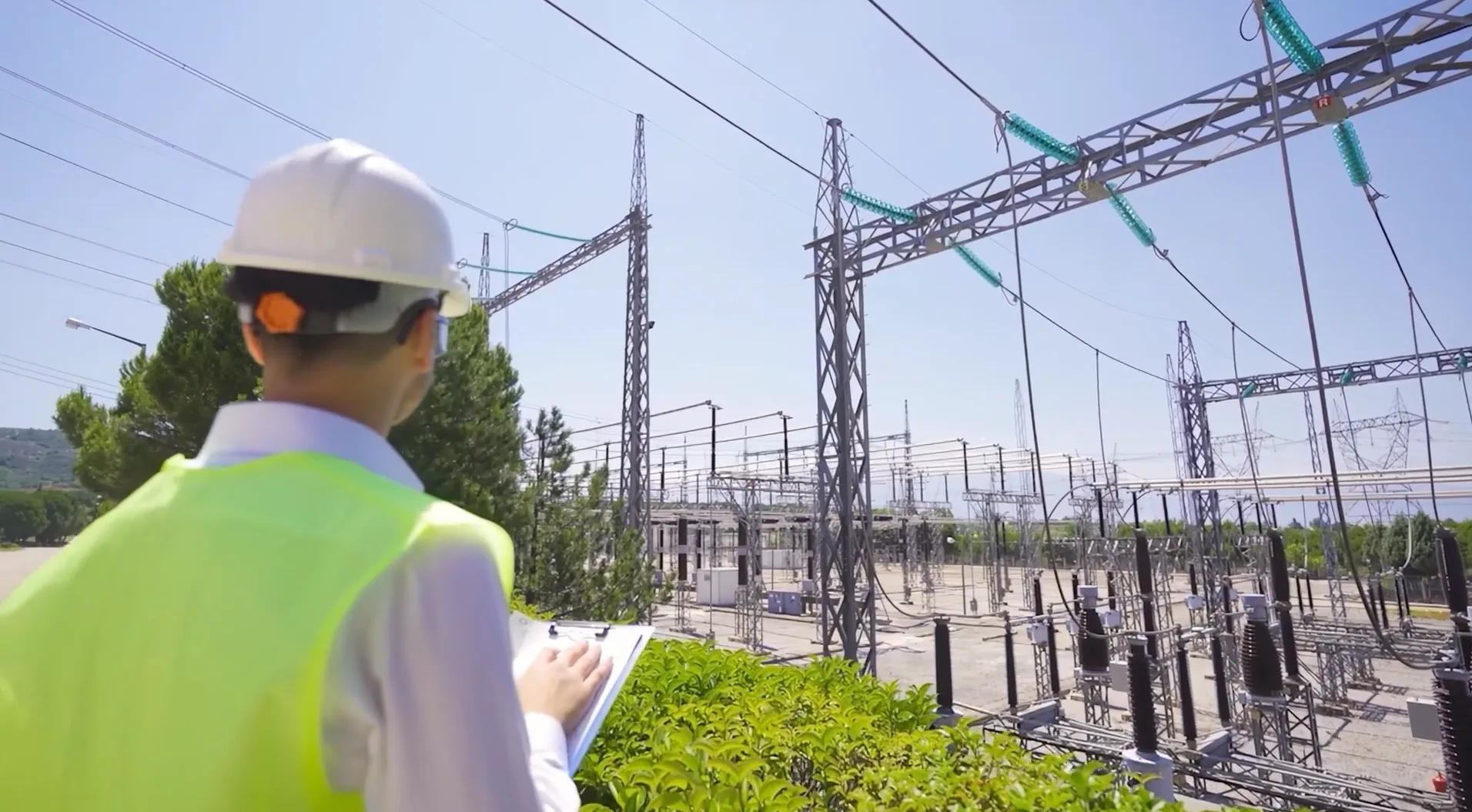
Substation inspections still run on a calendar. A crew is scheduled, a window is agreed, a switching plan is signed off, and someone walks the yard with a camera and a notebook. That model has held up for decades, and in most networks it still catches what it is designed to catch. The gap is everything that happens between visits.
A bushing that starts running warm goes unnoticed for weeks or months. A fence-line alarm at two in the morning shows movement and nothing else, so it gets written off or somebody gets sent. Oil levels and SF6 pressure sit on analog gauges with no remote read, true only at the moment someone last stood in front of them. Every one of those unknowns becomes a truck, an hour of driving, a job forced into a work schedule that was already full, and a person back inside an energized yard.
In recent years we’ve been working with utility teams in Europe, North America and Australia on testing an alternative. A drone permanently living on site in a dock, or “Drone in a Box” as we like to call it. It flies fixed mission plans on repeat schedules, first with a remote pilot in the loop and then autonomously. Typically, this involves flying the same route, the same standoff distances, the same camera angles and the same thermal captures on every pass. Nobody drives to the site. Nobody enters the yard.
What we’ve observed is that repeatability matters more than autonomy. When two image sets are captured from the same position weeks apart, comparison stops being a judgment call. A hotspot on a transformer bushing is no longer a reading somebody has to interpret against a photograph taken from a different spot last spring. It is a delta. Corrosion on a structure that has spread three centimeters is visible because the frame is identical. That is the point at which condition monitoring becomes something an asset team can act on rather than debate.
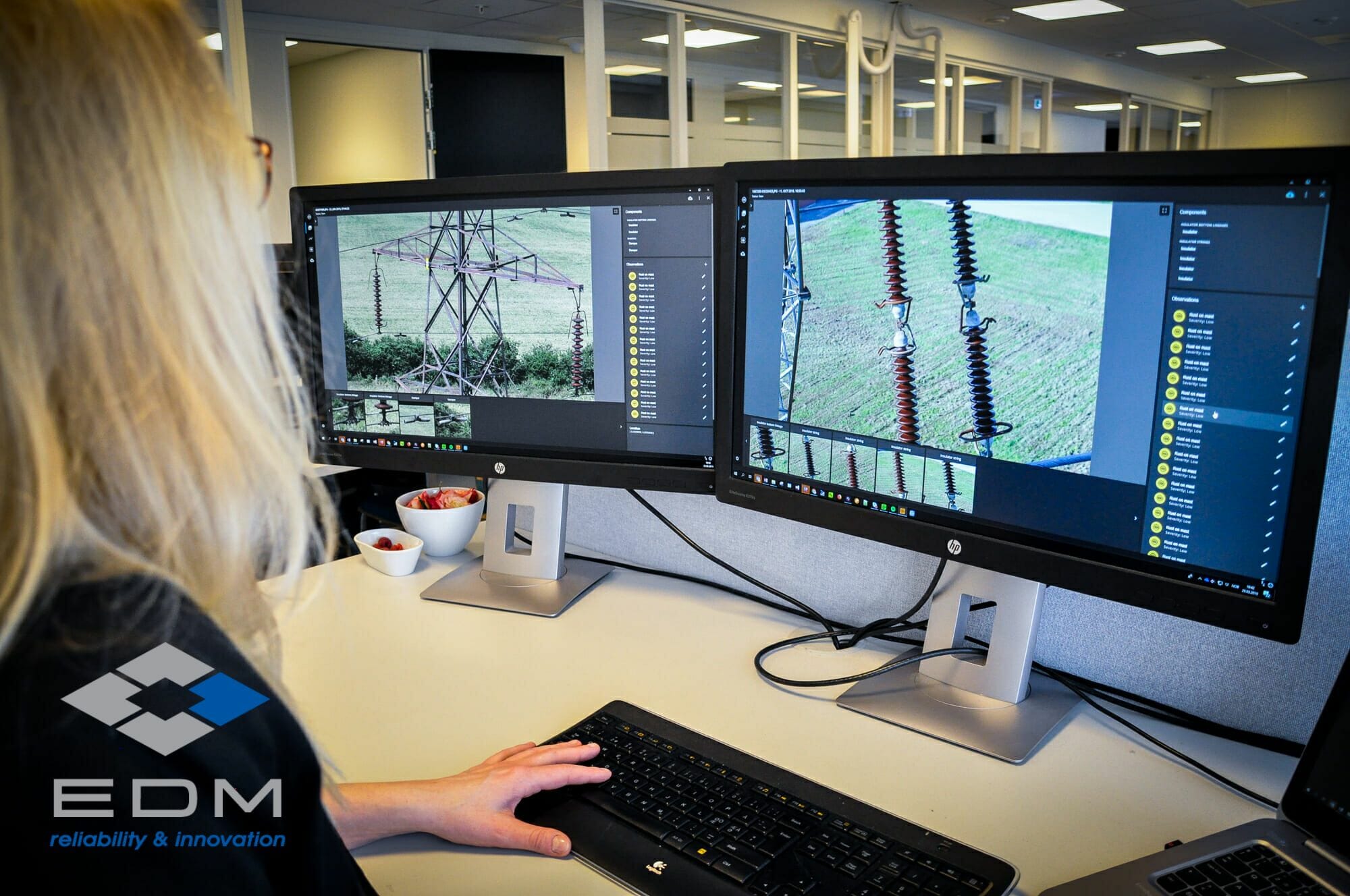
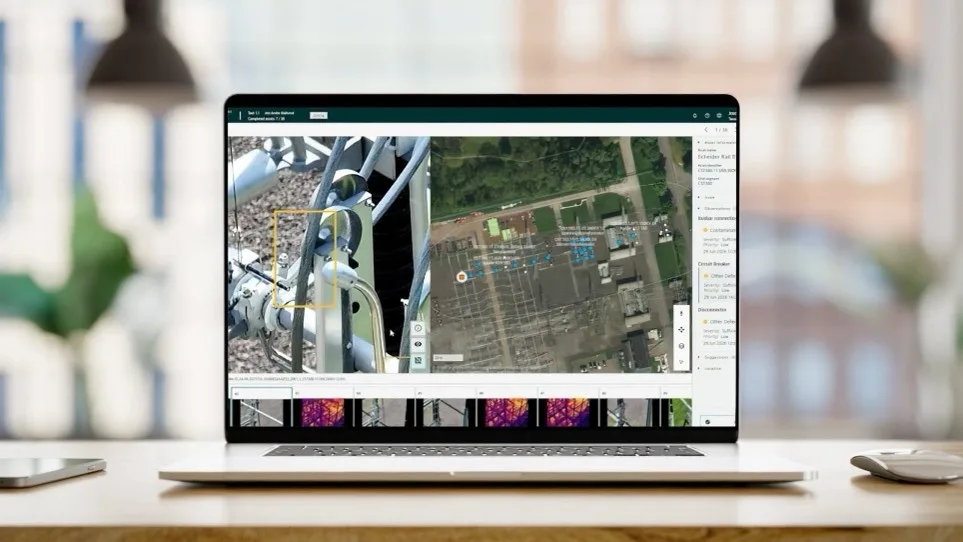
Everything the drones capture feeds a digital twin of the site in Grid Vision®, building a navigable image-based model of the yard, where every component sits in its real position and carries its own history. Our AI reviews every frame captured and surfaces defects automatically, from mechanical damage to thermal anomalies, so a certified inspector’s time goes on confirming and prioritizing findings rather than searching for them. Fewer hours in image folders, and fewer reasons to send anyone into an energized yard. Utility teams have been able to stop hunting for problems in image folders and start deciding what to do about the ones already surfaced.
The capabilities of the hardware are no longer the constraint
Docked drones stopped being a concept-project curiosity somewhere around 2025. The DJI Dock 3, launched in February that year, paired a weatherproof station with a drone capable of 50+ minutes of flight time. Skydio followed closely with the X10 Dock aimed squarely at utility work, adding BVLOS support and making the units better equipped for the outdoor elements. The drone-in-a-box market is already estimated to be worth USD 2.1 billion in 2026, heading toward USD 4.4 billion by 2030, with the utility-specific slice forecast to roughly triple by 2034.
These improvements in hardware now mean a new challenge for utilities: you can now generate more imagery in a month than your engineering team could review in a year, and unless something is grading, ranking and tracking that imagery, the dock has simply automated the collection of a backlog.
Evidence is becoming a regulatory requirement
Regulators in Europe and the US are shifting from asking utilities to be resilient to asking them to show it. NIS2 and the Critical Entities Resilience Directive arrived together in December 2022, one covering cyber obligations and incident reporting, the other physical site protection and resilience planning for sabotage and natural hazards. In the US and in Europe, a run of physical attacks on substations has pushed asset resilience up the legislative agenda, and multi-year replacement lead times have sharpened that focus.
A docked drone paired with AI-powered inspections answers both. Every flight leaves a dated, structured record of asset condition that an auditor can follow. When an alarm goes off, the same aircraft is over the yard in minutes rather than after a crew has been found and mobilized. Nobody has to open a gate to produce any of it.
Where to begin?
For utilities weighing this up, four decisions matter more than the choice of dock.
- Pick the sites where failure hurts most and access is hardest, rather than the ones that are easiest to fly.
- Agree on the mission plan before the dock goes in. A route built for a demonstration rarely survives contact with an inspection standard.
- Decide who reviews the AI output and what happens to a confirmed detection. The value shows up in the work order, not the image.
- Expect the first six months to build baseline. Change detection, risk scoring and remaining-life estimates earn their keep in year two.
We expect utilities will increasingly shift from treating inspection as a date in a calendar, to something that is “always on”.
Interested in learning more about incorporating Drone in a Box and AI-powered inspections into your asset monitoring? Request a demo.
Share article
Latest News & Resources
-
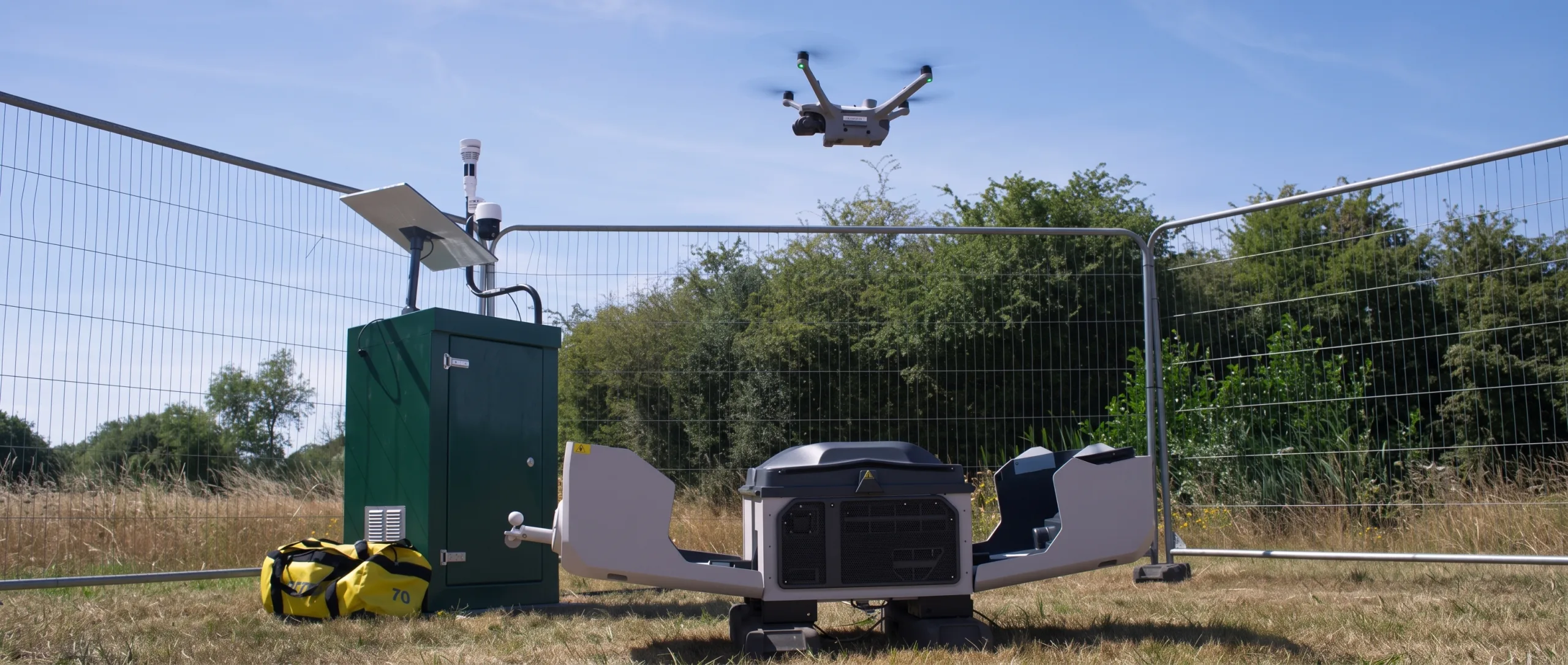
SP Electricity North West to trial remotely piloted drones, docked at substations, for rapid response fault finding and asset condition monitoring
Partnering with Skyports Drone Services & eSmart Systems, “Project VOLT” -
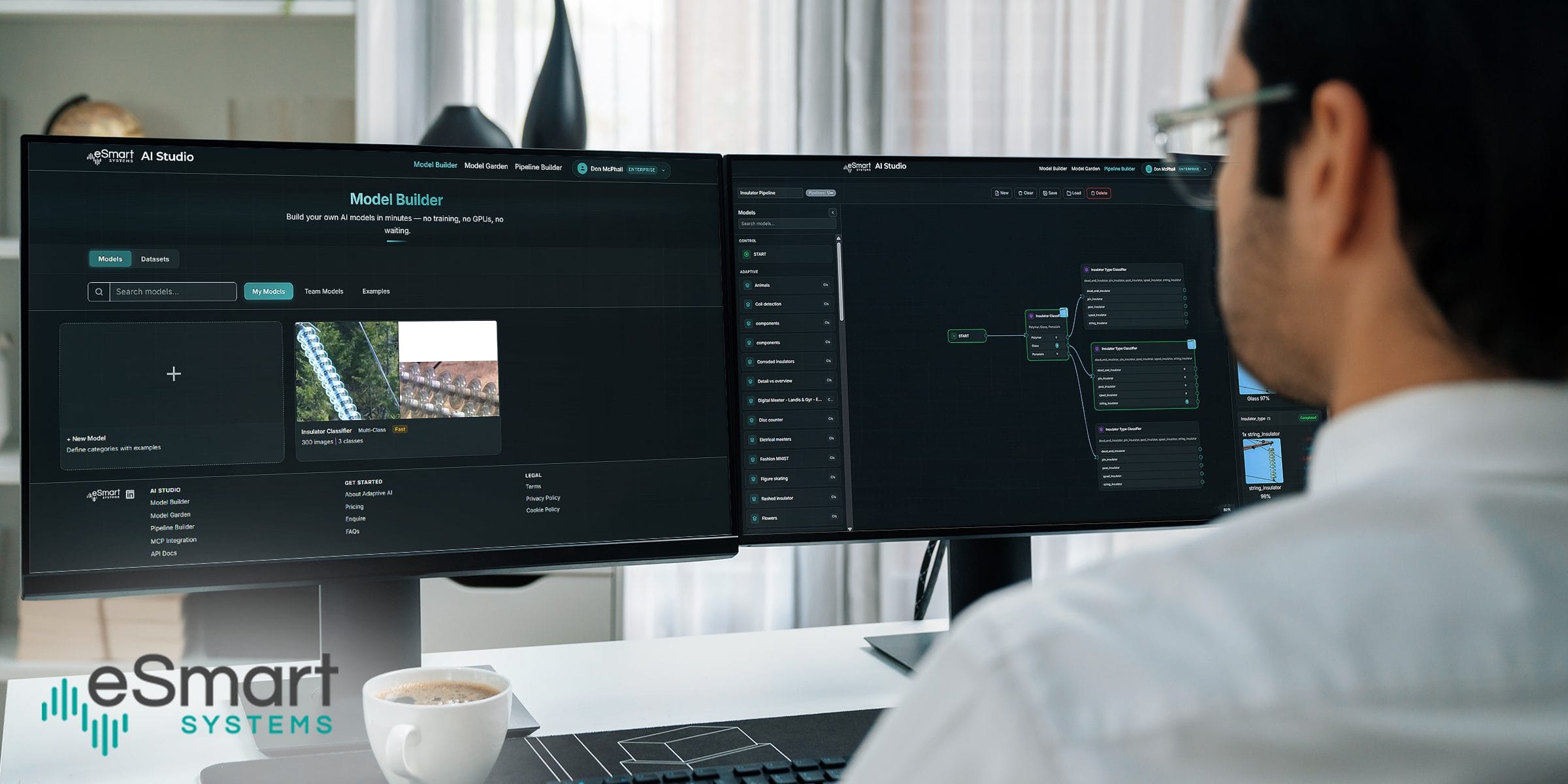
eSmart Systems Launches AI Studio: A New Era of Custom Computer Vision for Grid Inspection and Beyond
Built on eSmart Systems’ patent-pending Adaptive AI, the new -

Mapping the Wildfire Technology Landscape: A New Framework Built for Utilities
Wildfire risk is no longer a western problem. Utilities across