

eSmart Systems, a global leader in AI-based solutions for inspection and maintenance of critical energy infrastructure, has successfully raised EUR 30 million in new capital. The funding round has been led by TiLT Capital, the French energy transition platform of the Siparex Group, and with Quanta Services participating as a strategic investor.
Oslo, Norway, October, 2024 – eSmart Systems announces that it has raised EUR 30 million. TiLT Capital Partners, a French growth capital impact fund led the round, with major US energy infrastructure solutions company Quanta Services, Inc. (Quanta), joining as a strategic investor. Additionally, major existing owners Arosa Capital, Energy Impact Partners, Equinor Ventures, Nysnø Climate Investments, Future Energy Ventures and Kongsberg Group have participated in the capital raise.
The capital raise comes at a time of very strong demand for eSmart Systems, which has recently signed several strategic contracts with prominent customers such as Alliander and E.ON. With a total of EUR 63 million raised over the past two years, eSmart Systems not only reaffirms strong investor interest but also solidifies its position as one of the best-funded companies in the industry. This financial strength positions eSmart Systems uniquely to capture significant market opportunities and drive innovation in AI-based solutions for critical energy infrastructure.
We are very excited to join forces with TiLT and Quanta, both of whom have a deep understanding of the market we operate in and bring significant partnership and strategic value to further accelerate our growth. In a challenging macro environment, we managed to successfully close the round thanks to the strong momentum we are experiencing.
Strong market uptick
A global pioneer in AI-based solutions for inspection and digitalization of critical energy infrastructure, eSmart Systems operates in a market that is currently experiencing a strong uptick due to a combination of factors.
Electric utilities face significant challenges with a global grid at the risk of collapse due to aging infrastructure, increased energy consumption and more frequent extreme weather events. Lack of quality asset data compromises their ability to efficiently manage the grid.
Power networks resilience and reliability are at the heart of the energy transition that is taking place. eSmart Systems has developed a world class technology product that will support the ability of grids to adapt to a new reality of the power industry. We are excited to support the company in its growth journey, but also to penetrate the untapped potential in its existing customer base, which includes 50 of the largest grid companies worldwide.
Growth driver in North America
With Quanta joining eSmart Systems as a strategic investor, the two companies plan to collaborate on virtual inspection and grid digitalization services in the North American market, leveraging Quanta’s extensive scale, resources and expertise and eSmart Systems’ cutting edge digital solutions.
“We are very excited to bring Quanta onboard as an investor and a strategic partner. Our joint capabilities will be unmatched in the market, making us uniquely equipped to help transition utilities to more data driven and proactive operations.”, says Bache.
We continue to focus on providing our customers with the best solutions the market has to offer. By pairing eSmart Systems’ leading technology for virtual inspections with Quanta’s aviation, field force, and program management capabilities, Quanta will be able to both identify and resolve potential problems before they result in outages.
About eSmart Systems
eSmart Systems is a leading provider of AI-powered solutions for the inspection and maintenance of critical infrastructure. With the Grid Vision® portfolio, the company provides Inspection Management and Asset Information Management solutions and services to utilities globally. Grid Vision provides a data-driven and condition-based approach to infrastructure inspections and support utilities to reduce inspection costs, improve inspection safety, improve the quality of asset data and prolong asset life. More information about the company can be found at www.esmartsystems.com.
About TiLT Capital Partners
Created in 2018, TiLT Capital joined Siparex – an independent French specialist in Private Equity – in 2021 to become the Energy Transition platform of the Group. This collaboration has created a unique platform, combining the experience of a major player in Private Equity with the expertise of a team with over 50 years of experience in the energy industry, to meet the growing financing needs of the Energy Transition. More information about the company can be found at https://www.tilt-capital.com/en/
About Quanta Services, Inc.
Quanta is an industry leader in providing specialized infrastructure solutions to the utility, renewable energy, technology, communications, industrials, and pipeline industries. Quanta’s comprehensive services include designing, installing, repairing and maintaining energy and communications infrastructure. With operations throughout the United States, Canada, Australia and select other international markets, Quanta has the manpower, resources and expertise to safely complete projects that are local, regional, national or international in scope. For more information, visit https://www.quantaservices.com
Our new investors are joining Arosa Capital Management, Energy Impact Partners, Equinor, Future Energy Ventures, Kongsberg and Nysnø Climate Investments and together we will continue to support the energy transition through Grid Vision.
Wildfires are no longer confined to the western United States. In 2025 alone, the U.S. experienced more wildfires from January to August than in any comparable period over the past decade. These fires are increasingly ignited by grid-related failures, loose hardware, vegetation contact, and aging infrastructure – posing a growing threat to utilities nationwide. As climate change intensifies and regulatory scrutiny increases, utilities must shift from reactive inspection models to proactive, data-driven wildfire mitigation strategies.
A recent industry webinar brought together experts from eSmart Systems, Microsoft, Technosylva, and the Smart Electric Power Alliance (SEPA) to explore how artificial intelligence (AI) and predictive insights are helping utilities stay ahead of wildfire risks. The core of the discussion was how digital twin technologies, AI-powered inspection platforms, and predictive analytics are redefining the way utilities inspect, manage, and protect their infrastructure.
The Expanding Wildfire Threat
“Wildfire risk is no longer a regional concern,” said Don McPhail, VP of Market Development at eSmart Systems. “Utilities in areas that haven’t traditionally faced wildfires are now seeing increased threats due to hotter temperatures, prolonged droughts, and vegetation growth.”

Jared Leader from SEPA echoed this sentiment, noting that even utilities in Virginia and the Midwest are developing wildfire mitigation plans. “Having a wildfire plan is not optional anymore,” he said. “It’s central to utility planning.”
The stakes are high. Lives, infrastructure, and billions of dollars in liability are on the line. And with federal funding, such as the $3.7 billion wildfire initiative, now supporting AI adoption and data-sharing frameworks, utilities have a unique opportunity to modernize their approach.
Digitalization: The Foundation of Proactive Risk Management
At the heart of this transformation is digitalization. By creating a digital representation of your grid (image-based database that integrates high-resolution imagery, asset metadata, and grid topology and it’s all centralized in one place), utilities gain near real-time visibility into asset health and environmental conditions.
“Digitalization isn’t just the first step, it’s the bare minimum,” said Bilal Khursheed, Executive Director for Power & Utilities at Microsoft. “You can’t manage what you can’t measure.”
This visibility enables utilities to detect vegetation encroachment, asset degradation, and environmental stressors, supporting predictive analytics that identify risks before they escalate into ignition events.
AI-Powered Inspections: Faster, Smarter, Safer
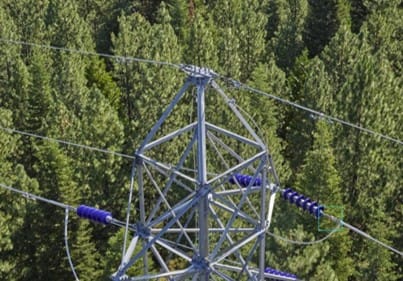
Traditional inspections are slow and labor-intensive. A single inspector climbing lattice towers could take years to complete a full inspection cycle. In contrast, drone-assisted inspections combined with AI-powered image analysis can reduce that timeline by up to 80%.
In one case study, a North American utility inspected 47 lattice towers and 52 wooden poles, capturing over 3,400 images.
The AI detected:
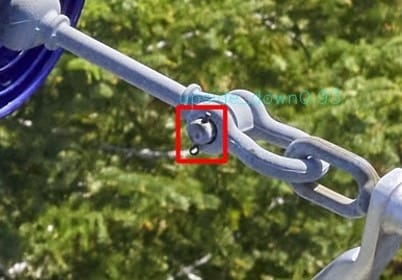
- 781 upside-down cotter pins
- Loose shackles and contaminated insulators
- Anomalies like woodpecker holes and cracked poles
These insights allowed the utility to target repairs that target high risk of ignition sources without climbing towers, improving safety and reducing risk. “We’re seeing a 60% uplift in defect detection compared to traditional methods,” McPhail noted.
Predictive Insights and Vegetation Management
Beyond defect detection, AI enables predictive insights by analyzing historical data and identifying patterns. For example, wooden poles near water may degrade faster due to humidity, while certain asset classes may show recurring vulnerabilities.
Vegetation is a primary fuel source for grid-related fires. AI-powered platforms use high-resolution imagery combined with conditional data to monitor vegetation encroachment and assess the overall health of grid assets. “Risk is everywhere and constantly changing,” said Indran Ratnathicam, Chief Growth Officer at Technosylva. “It’s not about knowing if your risk is high or low—it’s about knowing where and when it is.”
Human Expertise + AI: A Collaborative Future
While AI is a powerful tool, the panel emphasized that it’s not a replacement for human expertise. “AI augments decision-making,” said Khursheed. “It gives field crews superpowers, not pink slips.”
McPhail added, “The real transformation happens when data becomes insight, and insight becomes action. That’s where AI fits into the workflow, not as a standalone tool, but as part of a broader strategy.”
Advice for Utilities Starting Their AI Journey
AFor utilities just beginning to explore AI, the panel offered clear guidance:
- Start now. “The best time to plant a tree was 10 years ago. The second-best time is now – the same applies to utilities’ AI journey” McPhail said.
- Standardize and centralize data. Structured, high-quality data is essential for effective AI.
- Think beyond pilots. “Proof of concept proves potential, not readiness,” said Khursheed. Scaling requires operational integration.
- Collaborate. Partnering with experienced technology providers ensures success under real-world conditions.
A Call to Action
Wildfires are a growing crisis, but AI-powered inspection platforms and predictive analytics offer a path forward. By digitalizing assets, leveraging predictive insights, and integrating vegetation management, utilities can move from reactive to proactive wildfire mitigation.
As McPhail concluded, “Don’t wait for a fire to force change. Embrace AI and data-driven tools now. The cost of inaction is far greater than the investment in proactive technology.”


Schedule a demo at Enlit Europe 2024 and witness the power of Grid Vision®
eSmart Systems is a leading provider of AI-powered solutions for the inspection and maintenance of critical infrastructure. Our Grid Vision solution provides a data-driven and condition-based approach to infrastructure inspections and asset management.
Discover how Grid Vision is revolutionizing infrastructure inspections for top energy providers at our stand 5.L12.
If you do not already have a ticket to Enlit Europe 2024, we are pleased to offer you a free Expo Pass or discounted Summit Pass through the link below.

At eSmart Systems we have always been pushing the envelope to enable our utility customers to get the most out of technology to help solve their business problems. We pioneered virtual inspections for critical infrastructure over 10 years ago and are working with 60+ global utilities to inspect and digitalize power grid infrastructure every day. We were the first to market the use AI to support grid inspectors, to make the inspections faster and with more objectivity.
We are now breaking ground again with a new way for our customers to get the biggest return on using AI for virtual inspections!

AI is an amazing tool for supporting virtual inspections. And honestly, the first three models can be made by anyone. Running 50+ models at industrial scale is a completely different ballgame.
This is our turf. With our unparalleled volume of customers and data, we empower all our customers using AI.
The subsequent challenge is that utilities have different definitions of what they consider a defect. This is the challenge we are now addressing and solving with our new patent pending AI technology.
Our patent pending AI technology allows our AI to adapt to each utility’s specific needs while still capitalizing on global training data and models. While performing an inspection in Grid Vision®, our AI will adjust, adapt and learn, on the fly. This will reduce the number of false positives and dramatically increase the value of the AI.
Our customers will see our AI adapting to their own definitions of defects. By using our new patent pending technology, we enable our AI to adapt to each customer’s feedback to our AI while using Grid Vision. Which means improved performance of AI for defect detection, reduced retraining, and reducing inspection time.
The underlying patent pending technology is not limited to powerline inspections or image recognition. This methodology is applicable for anyone who uses feature extractors whether they are working with images, sound and even text. Anywhere you meet the feature extractions limitation, our patent pending technology will be helpful in getting the quickest ROI.
Want to learn more about our new patent pending AI technology and how it will help you get quicker ROI on your virtual inspections contact us today: Contact us today.
Our Adaptive AI technology is now available as part of AI Studio by eSmart Systems. Read the announcement or visit AI Studio at: ai.esmartsystems.com.
Data-driven trust issues, a real-world problem for electric utilities.
When you are responsible for the biggest machine in the world which entire societies rely upon to function, trustworthy asset data is a must. However, industry reports show that one-third of utility executives see poor asset data quality as a major challenge as it carries cross-functional impact on operations, planning and compliance.
The lack of trust in data is due to fragmented storing across multiple systems, and in multiple formats with a lack of audit trails, causing inconsistency, inaccuracies and can lead to severe consequences for the utility such as unplanned outages, an increase in field visits, costly compliance risks and poor capital planning and investment decisions.
Improving asset data management and ensuring high-quality data is often focused on centralizing the information, but without processes in place to validate and maintain the information these efforts quickly become a wasted opportunity, something several of our customers have reported to be true.

How do you uplift the quality of your data at scale?
Our Grid Vision® solution is developed by utility professionals, for utilities to not only uplift the quality of data, but to also include visual data, which is validated and maintained over time, through an established three step process ensuring you do your quality uplift right the first time:
Qualification: Understanding the starting point & identify gaps
To be able to uplift the data quality, you need to understand where you are and what you want to achieve with your data.
- Validating your data rules and models
Your asset data strategy needs to be tied to your business rules and built on the correct data model for your business to enable utilization.
- Verify your gaps and test the methodology
A small sample of assets are captured in the field and compared with the asset data in the system. As well as capturing the data, images of each asset are taken and linked to the asset in the field. The data is validated through a filling rate and qualified to assess the quality level. This step also identifies gaps in the data and tests the process in practice.
This stage qualifies gaps in your data to determine if there is a data quality issue. It provides an insight into image-based accurate asset data and tests the process end-to end so you can successfully scale.
Scaling: Enriching data
As your foundation is built, filling the gaps and enriching existing data is next. By using the qualification of the sampled asset data, the asset management strategy can be rolled out to all assets. In this stage, thousands of substations can be digitalized and visually documented with a clear audit trail and consistent capturing processes within a time frame so that the data remains accurate and current. A complete, image-based digital inventory is created through high-quality data, ready to be utilized by utility teams.
Utilization and Maintenance
Using an image-based digital inventory, utility teams can make data-driven decisions across their business processes such as network planning, maintenance and investment decisions with confidence, as the data is accurate with a clear audit trail. However, a digital asset requires maintenance to ensure it continues to represent its physical equivalent in the field. This requires continued updates to your data to reflect and validate changes to the physical asset through maintenance activities and updates.
Grid Vision supports every stage of the asset data management journey through its software and services, supporting each step in the lifecycle of infrastructure assets.
Listen to how Stedin used this phased approach and utilized Grid Vision to avoid potential failures among 22,000 substations: Watch webinar here
Repower which produces and distributes power to more than 48,000 customers in Switzerland, has partnered with eSmart Systems to digitalize and automate their grid inspection process. The program will utilize eSmart Systems’ Grid Vision® solution, which supports the full inspection and maintenance workflow with AI.
- Transitioning Repower’s grid inspections from manual to automated powered by AI.
- Grid Vision AI-supported software will be used to inspect their HV and MV grid.
- eSmart Systems will deliver inspection services for Repower AG’s overhead lines over the course of the partnership.

This partnership will enable Repower to provide safer, more accurate and efficient inspections that will provide greater visibility into their grid assets to support their asset management strategies for grid resiliency and reliability to support growing demand and transition to low carbon generation.
Power networks resilience and reliability are at the heart of the energy transition that is taking place. eSmart Systems has developed a world class technology product that will support the ability of grids to adapt to a new reality of the power industry. We are excited to support the company in its growth journey, but also to penetrate the untapped potential in its existing customer base, which includes 50 of the largest grid companies worldwide.
eSmart Systems will deliver the program as an inspection as a service and will utilize drones for the image capture with automated flight patterns to ensure the data is captured consistently and accurately with improved safety. For this program the actual grid inspection will be conducted within Grid Vision powered by AI and eSmart Systems will be working with regional drone operators for the image capture.
Repower has a clear ambition to improve their grid asset inspection and asset data to support the resiliency of their grid. We are excited to be part of their journey and look forward to delivering efficiencies and digitization of powerline inspections for Repower.
About eSmart Systems
eSmart Systems is a leading provider of AI-powered solutions for the inspection and maintenance of critical infrastructure. With our software solution Grid Vision® we revolutionize how utility companies operate and maintain transmission and distribution networks. eSmart Systems offers a data-driven and condition-based approach to infrastructure inspections that can be managed from a single platform. We support companies worldwide by ensuring reduced costs, safer inspections, and prolonged asset life.
About Repower
Repower is an international energy utility with its operational headquarters in Poschiavo. (Graubünden, Switzerland). Repower has been operating as an electricity producer, distribution grid operator and energy trader for more than 100 years. Its key markets are Switzerland and Italy.
Repower builds, operates and maintains distribution grids, substations, transformer stations, kiosks and supply lines right up to the house connection in Prättigau/Rhine Valley, Engadine/Valposchiavo and Surselva. The total length of the grid managed by Repower is around 3,000 kilometres.
Everyone is talking about virtual inspections, flying drones to capture grid assets and using AI to support all of this. But how do you ensure a ROI from this transition? By asking the right questions from the start.

Lets be clear not all virtual inspections are the same! We have been delivering virtual inspections assisted by AI for over 10 years and see time and time again utilities not being successful with their approach by not comparing apple to apples when comparing vendors and not asking the right questions of their teams when they want to implement these programs.
Questions you should be asking when transitioning to virtual inspections so you are successful.
- What problems are you trying to solve?
- What is your success criteria?
- What is the long-term strategy of transitioning to virtual inspections?
- Have you got the right data capture methodology?
- What data are you collecting when in the field – every asset or just assets impacted?
- Will the images you capture work for the software you are using and for the inspector?
- Have you got the right virtual inspection software?
- Have you got the right skills inhouse to make this successful?
- How is AI applied to improve the business process?
- How will you train the AI?
- How do you future proof your AI?
- How do you ensure consistency across your inspections?
- How will you process all the images you capture?
- Once have your inspection results what will you do?
- What is your strategy for the image-based data you are collecting in the field?- If you are collecting it and paying for you should use it.
- How will you future proof your investment?
If you apply virtual inspections to just replace your routine inspection cycle that is a great start and will definitely improve your safety, give you a great inspection report to go out and fix the issues. You can repeat and rinse this method over and over but it is still based on time and you would be missing out on the bigger return on investment.
If you transition to virtual inspections with your wider asset management team involved and link the program to your asset management strategy and also focus on the image-based data, that is where you see the biggest return – moving away from time-based inspections to risk of assets.
If you are investing in going out and collecting data in the field, make it count and get your return.
Contact us today to find out more.
Many workers’ roles have changed and evolved with the adaptation of emerging technologies. Inspectors, who are responsible for the conditional assessment of critical infrastructure like power grids, are no different. A virtual inspection is an inspection conducted while being physically away from the asset, meaning that virtual inspections leverage technology to fill the physical gaps. The inspector is still a human being, but safely distanced from the equipment. Let’s look at the role of the virtual inspector. We have summarized 6 main points on what differentiates the role of a virtual inspector.

1. Inspection at a desk
The role of a virtual inspector is to conduct the grid inspection at a desk using inspection software. With this type of inspection, they do not need to physically go and visit the asset. Software that has built-in inspection workflow can provide consistency and objectivity and provide the inspector with the business rules required to conduct the inspection based on the utilities standards and defect catalogue.
2. Images substituting for reality
The virtual inspector leverages visual data; images – captured out in the field for the virtual inspection. The images need to give the inspectors a full 360o view of the asset, as the visual inspection is a substitute for physically examining the assets.
If your image-capture methodology is not right you could end up giving the inspector too many images to view per asset, duplication or poor-quality images that makes it near impossible to identify defects and makes the inspection method inefficient.
3. Assistance by Artificial Intelligence
Most people have probably experienced the feeling of being overwhelmed and bored when performing a monotone task repeatedly. Imagine manually processing and linking 100 000 images to the correct asset, putting in the right coordinates and the relevant asset information. Pretty boring, right?
Artificial Intelligence can change that. An AI assistant will not get tired of doing repeatable tasks at scale, it is what it does best. By leveraging purpose-built AI software, virtual inspectors do not have to spend time on processing and linking images to assets manually, the AI will do it automatically. AI can also automate inventory and make a first pass at defect detection enabling the inspector to focus on high value tasks and save valuable time.
4. More time to conduct the inspection
With a virtual inspection the inspector can really take their time and view the asset structure from top to bottom and potentially identify more defects than when out in the field. When in the field you are going from asset to asset in different weather conditions and terrains. Here you are at the comfort of your desk and can zoom right into an asset.
5. Inspection reporting
No longer do inspectors have to manually note down defects or produce an inspection report. Inspection software can provide inspection reporting automatically and advanced software can also provide APIs into your core systems and automate your inspection results. This means that the inspector just has to focus on the task at hand: conducting the visual inspection.
Final thoughts
With skills shortage in the industry, tightening of budgets and needing to get more out of existing infrastructure, grid operators need to evaluate and adopt new strategies, technology and methodologies to their inspection programs.
Virtual inspections are an effective way to conduct routine inspections and can provide utilities with an additional tool in their inspection tool box. It also means that experienced inspectors can focus on high value tasks, where their skills and experience make a true difference.
We provide a flexible approach to virtual inspections, from working with customers to train their own inspectors to providing full end-to-end inspection services.
Thinking of making the transition? Contact us today!
eSmart Systems, a leading provider of AI-powered services and solutions for the inspection and maintenance of critical energy infrastructure, has signed a partnership with Naya, a Norway-based company with an all-female organization in Dehradun, India, created to ensure the ethical labelling of AI.

Power networks resilience and reliability are at the heart of the energy transition that is taking place. eSmart Systems has developed a world class technology product that will support the ability of grids to adapt to a new reality of the power industry. We are excited to support the company in its growth journey, but also to penetrate the untapped potential in its existing customer base, which includes 50 of the largest grid companies worldwide.
For AI to work successfully for infrastructure inspections it needs a lot of training and annotations. With the rapid growth in the AI market, organizations are using a lot of services that are unethical where employees are underpaid with extremely low wages and inadequate working conditions. Naya looks to address this by providing services conducted by women in India in a safe environment, giving them opportunities for growth, educational development and to foster brighter futures for young women.
At eSmart Systems as part of our commitment to sustainability and our core values, we are not only measured by what value we create, but by how we create it. Ensuring we deliver solutions in the most ethical and sustainable way is of upmost importance. We are delighted to be partnering with Naya and look forward to seeing the positive impact of our partnership. This initiative also supports our ambition to contribute to the goals of UN Global Compact, and aligns with the values of our owners for contributing to diversity and opportunity for everybody.
The partnership will see eSmart Systems and Naya working together on eSmart Systems’ Grid Vision® solution and will accelerate the growth of AI models and performance of those models, which will deliver value to their customers by reducing inspection costs, improving inspection safety, improving accuracy of asset data and prolonging asset life. The work will be performed in accordance with the high information security standard set up by the eSmart Systems Management System (Certified according to ISO 27001:2022).
About eSmart Systems
eSmart Systems is a leading provider of AI-powered solutions for the inspection and maintenance of critical infrastructure. With our software solution, Grid Vision® we revolutionize how utility companies operate and maintain their transmission and distribution grids. We support utilities globally to reduce inspection costs, make inspections safer, improve the quality of asset data and prolong asset life by providing an image-based digital inventory representing all physical grid assets. eSmart Systems has more than 20 years of international experience in establishing and operating knowledge-based, leading IT and energy-related companies targeting global markets.
About the Naya
Naya is a social impact startup that combines social sustainability and AI development by employing women from Indian slum areas. We offer high-quality annotation services to customers developing machine-learning models and NAYA employs impoverished women from slum areas (currently in Northern India) to complete the annotation tasks.
Our Indian colleagues are given dignified work, proper pay, and an opportunity to break out of generational poverty. Naya operates from its main office in Dehradun, India, comprising a team of 10 skilled professionals, with our headquarters situated in Trondheim, Norway. We specialize in serving the European and Norwegian markets. Recognized for our expertise, we were awarded 1 million NOK by Innovation Norway in April 2023. For more information visit: https://www.naya.no/
August 2025 – Wildfires are becoming an increasingly severe global challenge, with rising temperatures, prolonged droughts, and climate change creating perfect conditions for disasters. The devastation caused by wildfires is evident worldwide: the 2019–2020 Australia Bushfires (Black Summer), the 2023 Greece wildfires in Rhodes, Canada’s 169 reported wildfires by July 2023, Turkey’s 19 wildfires since mid-July 2023, and France’s massive fire burning over 2,500 acres along the Mediterranean coast. More recently, the 2025 Los Angeles wildfire underscored the growing risks.
While wildfires have natural and human-related causes, power grids have also emerged as a significant ignition source. Grid-related wildfires can occur due to falling trees, vegetation contact, aging components, or sparks from failing infrastructure. As utilities face increasing regulatory scrutiny and public pressure to mitigate these risks, artificial intelligence (AI) and advanced data solutions are proving to be transformative.
The growing role of AI in wildfire mitigation
Last week, a new executive order from President Trump called for agencies to create a roadmap leveraging AI, data sharing, modeling, and mapping capabilities to identify wildland fire ignitions and improve weather forecasting for better emergency response. A federal fund of $3.8 billion, although mostly a reallocation of existing resources, underscores the urgency for advanced wildfire management.
This directive aligns with the growing role of technology in wildfire prevention, including AI-based grid inspections and image data that leverage vegetation management and condition-based insights to ensure the physical grid is safe and in good working order. These insights help minimize fire risk.
Federal efforts, such as the recent $3.8 billion wildfire management fund and the executive order calling for AI-driven modeling and data sharing, could make this type of image and condition data more accessible to utilities and research initiatives. By promoting standardized data-sharing frameworks, subsidizing advanced imaging technology, and supporting AI training programs, these efforts enhance AI models by giving them larger, higher-quality datasets for defect detection and risk prediction, ultimately improving accuracy and reliability.
For utilities, this policy shift emphasizes the need to go beyond traditional inspections, leveraging AI platforms like Grid Vision® to detect early-stage defects and proactively mitigate wildfire hazards.
Why grid-related wildfires are rising
Power grids are under stress due to climate-driven heat waves, severe droughts, and increased vegetation growth. Aging infrastructure often fails to keep up with these conditions. Factors contributing to grid-related wildfires include:
- Tree or branch contact with powerlines.
- Exploding material or sparks from faulty components.
- Arcing or conductor failures due to loose hardware.
- Dry vegetation surrounding powerlines acting as fuel.
Conductors play a key role in preventing fire hazards. To ensure safety:
- Vegetation must be cleared around lines.
- Conductors must remain separated using spacers.
- Cotter pins and related hardware must remain securely fixed.
- C-hooks and chain shackles must be inspected for wear, corrosion, or deformation.
Loose or upside-down cotter pins and worn or damaged C-hooks compromise the safety barrier by weakening the points where conductors and insulators are secured. This increases the risk of conductors falling or generating sparks when in contact with nearby surfaces. A single cotter pin failure on a 100-foot lattice tower can have devastating consequences, and a worn C-hook can create stress points that accelerate component failure under wind or load. Yet manually inspecting 50 cotter pins and multiple C-hooks per tower is both tedious and prone to human error.
AI-supported virtual inspections are a game-changer
The 2025 Los Angeles wildfire and the 2018 Camp Fire in Butte County, and the 2025 Eaton wildfire in Los Angeles highlight the devastating consequences of delayed or insufficient grid inspections. The Camp Fire remains the deadliest and most destructive wildfire in California’s history, underscoring why utilities must move beyond slow, manual inspection cycles.
Southern California likely has 3,500 to 4,000 lattice-steel transmission towers. Manual climbing inspections take about 2 hours per tower, meaning a single inspector would need 3.5 to 4 years to complete one full cycle. In contrast, drone-assisted inspections reduce that timeline to 7 months to 1.5 years, resulting in an efficiency gain of up to 80%.
AI-powered image analysis further accelerates the process by detecting and classifying defects within seconds, removing the need for hours of manual image review and enabling fast, data-driven maintenance decisions.
Solutions like Grid Vision® create a digital representation of the grid by linking high-resolution imagery, asset metadata, and grid topology into one platform.
Key benefits include:
- Faster defect detection and automated workflows
- Lower inspection costs and reduced manual efforts
- Safer operations by minimizing tower climbs
- Regulatory-ready, auditable visual data
- Early detection of high-risk defects, such as corrosion or faulty hardware
Case study: AI-supported inspections and advanced analytics for wildfire risk management
A leading North American utility leveraged AI-powered inspections to strengthen its wildfire prevention strategy. Using drone flights combined with AI analytics, the utility inspected 47 lattice towers and 52 wooden poles, capturing 3,465 high-resolution images in total.
AI findings:
- 781 instances of upside-down cotter pins were detected out of 11,000 cotter pin images, within seconds.
- Loose cotter pins, chain shackles, and contaminated insulators were flagged for immediate maintenance.
- Additional anomalies such as woodpecker holes, flashed insulators, and cracked poles were identified.
Project outcomes:
- The customer confirmed their grid’s good condition regarding C-hooks and shackles.
- Maintenance teams could target defect repairs without climbing towers, improving safety.
- AI’s speed and accuracy allowed the customer to proactively correct wildfire-relevant defects, preventing potential ignition events.
Vegetation management and conditional data
Vegetation is a primary fuel source for grid-related fires. AI-powered platforms use high-resolution imagery combined with conditional data from inspections to monitor vegetation encroachment and assess the overall health of grid assets.
Grid Vision® includes a “Vegetation Right of Way” filter that allows utilities to:
- Identify assets in densely vegetated areas.
- Pre-plan field work, reducing time and site visits.
- Assess site access needs before sending maintenance crews.
By combining vegetation data with condition-based insights, utilities can create a more accurate view of wildfire risks and take proactive measures to mitigate them.
Beyond inspections: predictive insights
AI-driven platforms offer more than just defect detection. With historical data and year-over-year comparisons, utilities can identify patterns that may increase wildfire risk, such as:
- Wooden poles rotting near water due to humidity.
- Asset degradation based on age or material type.
- Recurring vulnerabilities across similar asset classes.
The holistic asset data in Grid Vision® enables utilities to overlay additional datasets, such as roads, gas pipelines, or water bodies, onto their grid map. This contextual data supports better planning, risk prioritization, and faster incident response.
Common vulnerabilities and incident investigations
When a failure occurs, such as an MV substation outage, traditional utilities may lack recent, high-quality imagery to reconstruct the cause.
With AI-powered inspections, utilities gain:
- Accurate, structured visual data of substations and transmission lines.
- A full audit trail for regulatory reporting.
- The ability to conduct root cause analysis and prevent future incidents.
For example, one utility used inspection data to locate and replace a lightning arrestor flagged by regulators as a fire hazard. Without the AI-driven inventory, they would not have known where these components were installed.
Federal and industry momentum
The $3.8 billion federal initiative and policy emphasis on AI highlight the government’s recognition that data-driven approaches are critical to wildfire mitigation. This is not just a challenge for California but a national and global issue.
As utilities seek to modernize operations, partnerships between AI inspection providers, satellite imaging companies, and wildfire modeling solutions will play a critical role. Platforms like Grid Vision® can provide ignition source risk data, feeding into larger wildfire prevention ecosystems.
Key steps utilities can take now
- Adopt AI-powered inspection platforms to reduce manual labor and improve accuracy.
- Digitize grid assets into a central, image-based database for faster analysis.
- Integrate vegetation management tools, including satellite data, to identify risks before they escalate.
- Use predictive analytics to monitor asset health over time.
- Collaborate with technology partners to create comprehensive wildfire mitigation strategies.
In summary
Wildfires are no longer an isolated risk, they are a global crisis intensified by climate change and aging grid infrastructure. AI-powered tools like Grid Vision® give utilities the ability to detect 60 percent more defects than traditional inspections, reduce operational costs, and most importantly, prevent fire ignitions before they happen.
From cotter pin detection to vegetation monitoring, virtual inspections create a digital twin of the grid, enabling utilities to compare asset conditions over time, plan maintenance more effectively, and improve safety for both workers and communities.
The message is clear: AI and data-driven insights are the future of wildfire prevention. With federal funding and policy momentum supporting innovation, now is the time for utilities to embrace technology that will save time, reduce costs, and protect lives and infrastructure from catastrophic fires.
